Kenmore Sewing Machine Model 385 Manual: A Comprehensive Guide
This guide offers detailed instructions for the Kenmore 385 sewing machine, covering model numbers 385.16951-385.81808 and more. PDF manuals are readily available for download and printing.
The Kenmore 385 sewing machine represents a legacy of dependable performance within the realm of home sewing. This machine, available in various model iterations – including 385.16951 through 385.81808, and others like 385.11101590 – 385.12916890, and 385.15008100 – 385.1684180 – has been a staple for many sewing enthusiasts.
Understanding its features and operation is made easier with a dedicated manual. These manuals, conveniently offered in PDF format for easy download and printing, provide essential guidance. Whether you’re a seasoned seamstress or a beginner, accessing the correct manual ensures optimal use and longevity of your Kenmore 385. Proper record-keeping of the model and serial number, found on the nomenclature plate, is also crucial.
Model Number and Serial Number Location
Locating your Kenmore 385 sewing machine’s model and serial numbers is vital for accessing the correct documentation and support. These crucial identifiers are found on the nomenclature plate, a small metal plate affixed to the machine itself. This plate provides specific details about your particular model variant, such as 385.17620 or 385.16221300.
The manual explicitly directs users to Page 4 for identification of this nomenclature plate. Recording these numbers in the designated space within your owner’s manual – or keeping them in a safe place – will streamline any future inquiries for parts, repairs, or accessing the appropriate PDF manual version. Accurate identification ensures you receive the correct assistance for your specific Kenmore 385.
Available Manual Versions
Numerous manual versions exist for the Kenmore 385 sewing machine, catering to the diverse range of sub-models produced. Specifically, manuals are available for models 385.16951 through 385.81808, encompassing a broad spectrum of variations. Additionally, dedicated manuals support models within the 385.11101590 to 385.12916890 range, and another set covers 385.15008100 through 385.1684180.
These manuals are conveniently offered in PDF format, allowing for easy download and self-printing. For those preferring a professionally bound copy, options are available through designated links. Identifying your precise model number is crucial to downloading the correct manual, ensuring accurate instructions and optimal machine operation. Accessing the right manual unlocks the full potential of your Kenmore 385.
385.16951 ⏤ 385.81808 Manuals
Owners of Kenmore 385 sewing machines within the model range of 385.16951 to 385.81808 can readily access comprehensive user manuals. These manuals provide detailed guidance on all aspects of machine operation, from initial setup and threading to advanced stitching techniques and troubleshooting. The PDF format ensures easy accessibility and convenient printing for immediate reference during sewing projects.
These manuals cover essential topics like stitch selection, tension adjustment, presser foot usage, and routine maintenance procedures. They are designed to empower both novice and experienced sewers to maximize the performance and longevity of their Kenmore 385. Downloadable resources offer clear diagrams and step-by-step instructions, simplifying complex tasks and fostering a confident sewing experience.
385.11101590 ⏤ 385.12916890 Manuals
For Kenmore 385 sewing machine owners with model numbers falling between 385.11101590 and 385.12916890, dedicated user manuals are available for download. These resources are specifically tailored to these models, offering precise instructions and detailed illustrations to guide users through every aspect of machine operation. The manuals cover essential functions, including threading procedures, stitch selection, and tension adjustments.
These downloadable PDF manuals ensure convenient access to information, allowing users to print sections for easy reference during sewing projects. They also include troubleshooting tips to address common issues, helping maintain optimal machine performance. Understanding your machine’s features is key, and these manuals provide the knowledge needed for successful and enjoyable sewing.
385.15008100 ⏤ 385.1684180 Manuals
Kenmore 385 sewing machine users with models ranging from 385.15008100 to 385.1684180 can access comprehensive manuals in PDF format. These guides are designed to maximize your sewing experience, offering detailed explanations of all machine functions. You’ll find step-by-step instructions for threading, bobbin winding, and stitch selection, ensuring accurate and efficient operation.
The manuals also provide valuable insights into tension settings, presser foot usage, and needle selection for various fabrics. Troubleshooting sections address common issues, helping you quickly resolve problems and maintain your machine’s longevity. Download and print these resources for convenient access while you sew, empowering you to create beautiful projects with confidence.
Downloading and Printing Manuals
Accessing your Kenmore 385 sewing machine manual is straightforward. Numerous online resources offer PDF versions for immediate download, allowing you to quickly obtain guidance for your specific model. These digital manuals provide a convenient and cost-effective solution for referencing instructions during your sewing projects.
For those preferring a physical copy, the option to have the manual printed and bound is also available. This ensures a durable and easily accessible resource for long-term use. Downloads are typically instant, minimizing wait times and enabling you to start sewing with confidence. Keep your manual readily available for optimal machine performance and troubleshooting.
Key Features of the Kenmore 385 Sewing Machine
The Kenmore 385 sewing machine stands out as a versatile and dependable tool for a wide range of sewing tasks. Its robust construction and durable materials ensure longevity, even with frequent use. This machine is designed to handle various fabrics and projects, making it suitable for both beginners and experienced sewers.
Key features include adjustable stitch settings, allowing for customization based on your project needs. The machine also boasts a reliable tension system, ensuring consistent and professional-looking results. Its user-friendly design and clear instructions, found within the manual, contribute to a seamless sewing experience;
Threading the Kenmore 385
Proper threading is crucial for the Kenmore 385’s optimal performance. The instruction manual provides detailed, step-by-step diagrams to guide you through both upper and lower threading processes. Begin by raising the presser foot and threading the upper thread, following the numbered guides on the machine.
Next, wind the bobbin evenly and insert it correctly into the bobbin case. Ensure the thread flows smoothly through all tension discs and guides. Incorrect threading is a common cause of issues, so carefully review the manual’s illustrations. A correctly threaded machine will produce consistent, even stitches.
Upper Threading Instructions
To begin upper threading on your Kenmore 385, ensure the machine is turned off and the presser foot is raised. Start by placing the thread spool on the spool pin. Next, guide the thread through the first thread guide, then down and around the tension disc – this is vital for proper stitch formation.
Continue by threading the take-up lever, ensuring the thread is securely seated. After that, lead the thread through the remaining thread guides and finally, through the needle eye, from front to back. Refer to the manual’s diagrams for precise visual guidance. Correct upper threading prevents skipped stitches and ensures smooth operation.
Bobbin Winding and Insertion
Begin bobbin winding by placing the thread spool on the spool pin and guiding the thread through the bobbin winding tension disc. Then, thread the end of the thread through a hole in the bobbin, securing it with a few wraps. Engage the bobbin winding mechanism – typically by pushing the bobbin spindle to the right.
Press the foot pedal gently to wind the bobbin evenly. Once full, disengage the winding mechanism and trim the thread. To insert the bobbin, open the bobbin case and place the bobbin inside, ensuring the thread unwinds in the correct direction, as illustrated in your manual. Finally, guide the thread through the tension spring before closing the bobbin case.
Adjusting Tension Settings
Proper tension is crucial for quality stitches. The Kenmore 385 features upper and lower tension controls. Begin with the upper tension set to the default setting, typically marked ‘4’ or ‘5’. Test sew on a scrap fabric similar to your project material.
If the upper thread is looping on the underside of the fabric, increase the upper tension. Conversely, if the lower thread is looping on the top, decrease the upper tension. Adjust in small increments, retesting after each change. The bobbin tension is usually pre-set, but minor adjustments may be needed; consult your manual for specific instructions. Achieving balanced tension ensures even, professional-looking seams.
Stitch Selection Guide
The Kenmore 385 offers a variety of stitches for diverse sewing needs. A straight stitch is ideal for constructing garments and general sewing tasks; adjust stitch length for different fabric weights. For stretch fabrics or decorative edges, utilize the zigzag stitch, varying width and length to achieve desired effects.
Explore other stitch options like buttonhole settings and decorative patterns, referencing the stitch diagrams in your manual. Experiment with settings on scrap fabric before applying them to your project. Correct stitch selection and settings are vital for achieving professional results and ensuring fabric compatibility. Remember to consult the manual for detailed stitch guides.
Straight Stitch Settings
For standard fabrics, a straight stitch length of 2.5mm is a versatile starting point. Lighter fabrics, like voile or silk, benefit from a shorter stitch length – around 2.0mm – to prevent puckering. Heavier fabrics, such as denim or canvas, require a longer stitch length, approximately 3.0-3.5mm, for strength and durability.
Always test your chosen stitch length on a scrap of the fabric you’re using. Adjust as needed to achieve a smooth, even seam. A too-short stitch can cause fabric to gather, while a too-long stitch may weaken the seam. Refer to your Kenmore 385 manual for specific recommendations based on fabric type and project requirements.
Zigzag Stitch Settings
The Kenmore 385’s zigzag stitch offers versatility for various applications. A narrow zigzag (width of 1.0-1.5mm, length of 2.0-2.5mm) is ideal for finishing raw edges to prevent fraying, or for light stretch fabrics. A wider zigzag (width of 3.0-4.0mm, length of 2.5-3.0mm) is suitable for attaching elastic or creating decorative stitching.
Experiment with different width and length combinations on scrap fabric. For heavier fabrics, increase both width and length for a stronger, more durable zigzag. Always consult your Kenmore 385 manual for detailed guidance and specific settings for different fabric types and desired effects. Proper tension adjustment is crucial for a balanced zigzag stitch.
Presser Foot Options and Usage
The Kenmore 385 sewing machine benefits from a range of presser feet, expanding its capabilities. A standard zig-zag foot is all-purpose, suitable for most fabrics and stitches. An elastic foot simplifies attaching elastic, ensuring even stretching. A zipper foot allows close stitching along zipper teeth. Buttonhole feet automate buttonhole creation, offering consistent results.
Proper foot selection is crucial for optimal performance. Refer to your manual for guidance on which foot to use for specific tasks. Ensure the foot is securely attached before sewing. Experiment with different feet to discover new techniques and enhance your sewing projects. Correct presser foot pressure is also vital for fabric control.
Needle Selection for Different Fabrics
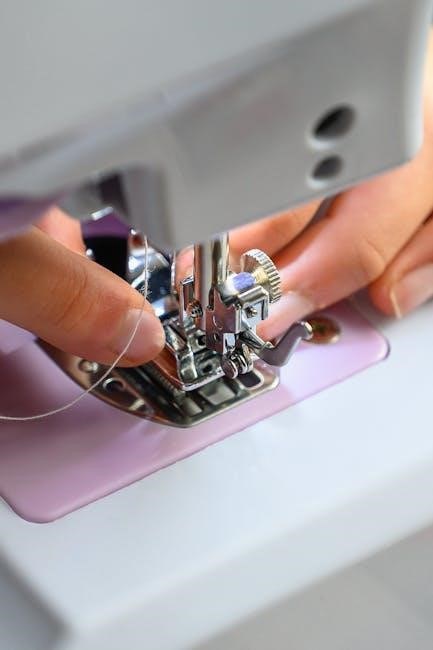
Choosing the correct needle is paramount for successful sewing with the Kenmore 385. Universal needles work well for woven fabrics like cotton and linen. Ballpoint needles are essential for knit fabrics, preventing skipped stitches and fabric runs. Stretch needles are designed for highly elastic materials like spandex and Lycra.
Needle size also matters; smaller numbers for lightweight fabrics, larger numbers for heavier materials. A size 80/12 is good for fine fabrics, while a size 90/14 suits medium-weight fabrics. Always replace dull or damaged needles to avoid fabric damage and ensure stitch quality. Refer to your manual for a comprehensive needle guide tailored to the Kenmore 385.
Troubleshooting Common Issues
Encountering problems with your Kenmore 385 is common, but often easily resolved. If the machine won’t power on, check the power cord and ensure it’s securely plugged in. Thread breakage frequently stems from incorrect threading, a dull needle, or improper tension. Re-thread the machine carefully, replace the needle, and adjust the tension settings.
Skipped stitches can indicate the wrong needle type for the fabric or a bent needle. Consistent tension issues may require cleaning the tension discs. Consult your manual for detailed diagrams and solutions. Remember regular maintenance, like cleaning and oiling, prevents many issues.
Machine Not Powering On
If your Kenmore 385 fails to power on, begin with the simplest checks. Ensure the power cord is firmly connected to both the machine and a functioning electrical outlet. Test the outlet with another device to confirm it’s supplying power. Inspect the power cord itself for any visible damage, such as cuts or fraying.
Check the machine’s on/off switch to ensure it’s in the ‘on’ position. Some models have a foot pedal switch; verify it’s also properly connected and functioning. If the issue persists, consult a qualified technician, as internal electrical components may require professional attention. Do not attempt repairs yourself if you are not experienced.
Thread Breakage Problems
Frequent thread breakage on your Kenmore 385 often indicates a threading issue. Re-thread the machine completely, ensuring the thread is properly seated in all guides and the tension discs; Verify the correct needle is installed for the fabric type and thread weight. A dull or damaged needle is a common cause of breakage.
Adjust the thread tension; too-tight tension can strain the thread. Ensure the bobbin is wound evenly and inserted correctly. Check for lint or debris buildup in the threading path and clean thoroughly. If problems continue, try a different spool of thread, as some threads are more prone to breaking.
Maintaining Your Kenmore 385
Regular maintenance is crucial for the longevity of your Kenmore 385. Cleaning should be performed after each use to remove lint and dust from the bobbin area and threading paths. Oiling key lubrication points – as indicated in your manual – ensures smooth operation. A consistent schedule prevents build-up and potential malfunctions.
Inspect the needle regularly for damage and replace as needed. Clean the feed dogs to prevent fabric snagging. Dust the exterior with a soft cloth. Follow a schedule of monthly deep cleaning and oiling, and annual professional servicing for optimal performance and to extend the life of your machine.
Cleaning and Oiling
Regular cleaning of your Kenmore 385 is essential. After each use, remove the needle plate and brush away lint from the bobbin area. Use a small brush to clear thread debris from the threading paths and tension discs. Oiling specific points – upper shaft, bobbin winder, and motor – ensures smooth operation.
Apply sewing machine oil sparingly to these areas, avoiding over-lubrication. Wipe away excess oil to prevent staining fabric. A clean machine operates efficiently and reduces wear and tear. Refer to your manual for specific oiling points and recommended oil types for optimal performance and longevity of your Kenmore 385.
Regular Maintenance Schedule
Establish a routine for maintaining your Kenmore 385. After every 8 hours of use, clean the bobbin area and oil key components. Monthly, thoroughly inspect the machine for loose screws and tighten as needed. Every six months, consider a deeper cleaning, including removing the needle plate and feed dogs for detailed cleaning.
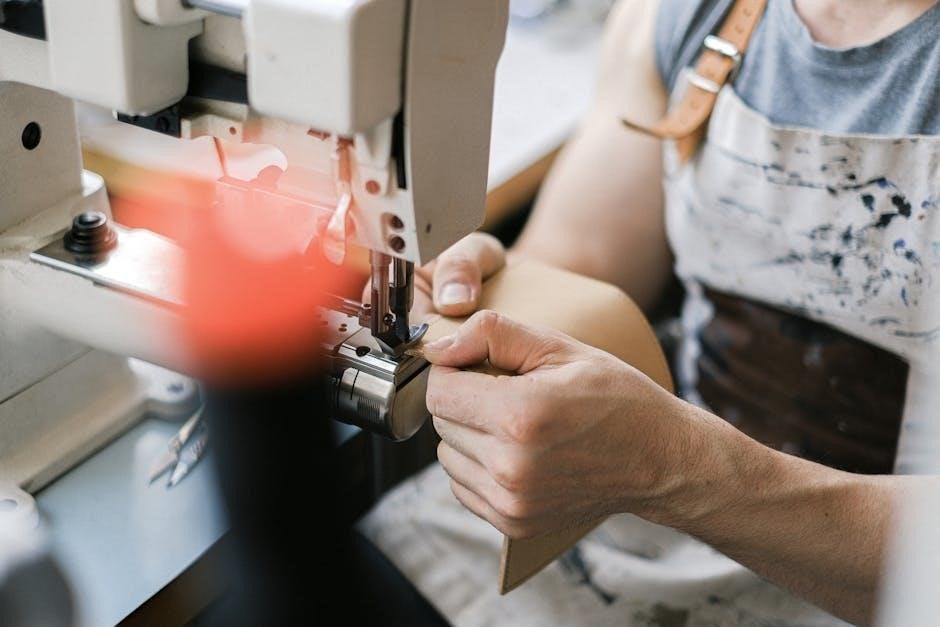
Annually, it’s advisable to have the machine professionally serviced. Regular maintenance prevents breakdowns, extends the machine’s lifespan, and ensures consistent stitch quality. Following this schedule will keep your Kenmore 385 operating smoothly and reliably for years to come, saving you costly repairs.
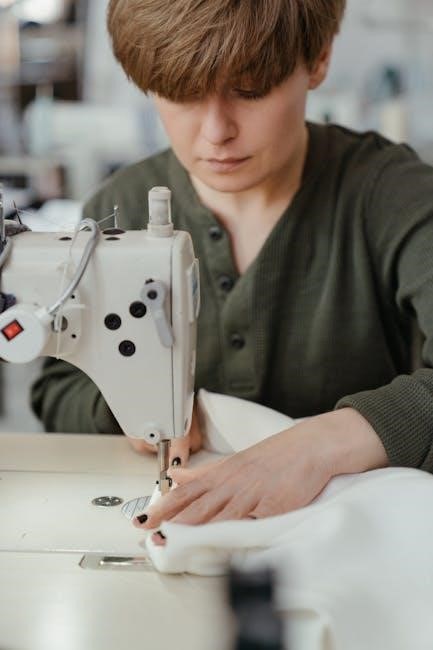
Understanding the Nomenclature Plate
The nomenclature plate, located on your Kenmore 385, is crucial for identifying your specific model and accessing the correct resources. This plate displays the model number – such as 385 – and a unique serial number. Record these numbers in a safe place, as they are essential when ordering replacement parts or seeking technical support.
The model number helps pinpoint the exact features and specifications of your machine. The serial number provides information about the manufacturing date and can assist with warranty claims. Refer to Page 4 of your owner’s manual for the plate’s precise location on your Kenmore 385.
Safety Precautions
Prioritize safety when operating your Kenmore 385 sewing machine. Always disconnect the power supply before threading, changing the needle, or performing any maintenance. Never attempt to repair the machine yourself; seek qualified service personnel for complex issues. Keep fingers away from moving parts, like the needle and presser foot, during operation.
Ensure the machine is placed on a stable, level surface. Avoid using damaged power cords or plugs. Do not operate the machine in damp or wet conditions. Supervise children closely when they are near the sewing machine. Always refer to the complete safety guidelines detailed in your Kenmore 385 owner’s manual.
Kenmore 385.17620 Specifics
The Kenmore 385.17620 sewing machine user manual details features for stitch selection, threading, and presser foot usage. It provides diagrams illustrating proper needle threading and bobbin winding techniques. This model caters to various sewing needs, covering parameters like stitch length and width adjustments. The manual emphasizes understanding the interplay between needle, thread, and fabric for optimal results.
Specifically, it guides users through tension settings for different fabric types, ensuring consistent stitch quality. It also details the function of each presser foot, aiding in specialized sewing tasks. Refer to the manual for troubleshooting common issues and maintaining peak performance of your Kenmore 385.17620.
Kenmore 385.16221300 Durability
The Kenmore 385.16221300 sewing machine is recognized for its robust construction and long-lasting performance. Built with durable materials, this model is designed to withstand frequent and extended use, making it a reliable choice for both beginners and experienced sewers. Regular maintenance, as outlined in the owner’s manual, is key to preserving its longevity.
The machine’s solid build quality minimizes wear and tear, ensuring consistent operation over time. Proper cleaning and oiling, detailed in the manual, prevent internal friction and maintain smooth functionality. Investing in this model means acquiring a sewing machine built to endure, offering years of dependable service.
Kenmore 385.1564180 Instruction Manual Details
The Kenmore 385.1564180 instruction manual is a comprehensive resource for users, providing detailed guidance on operating and maintaining this sewing machine. It features step-by-step threading diagrams, ensuring correct setup for both upper and bobbin threads. Clear instructions cover tension adjustments, crucial for achieving optimal stitch quality on various fabrics.
Furthermore, the manual includes detailed explanations of stitch selection, presser foot usage, and needle choices. Troubleshooting sections address common issues like thread breakage, empowering users to resolve problems independently. This manual is designed to build confidence, allowing users to fully utilize the machine’s capabilities and enjoy a seamless sewing experience.
Resources for Replacement Parts
Finding replacement parts for your Kenmore 385 sewing machine can ensure its longevity and continued performance. Several online retailers specialize in vintage and current sewing machine components. Sears PartsDirect is a primary source, offering a wide selection of genuine Kenmore parts, searchable by model number. Additionally, websites like eBay and specialized sewing machine parts suppliers often carry belts, needles, bobbins, and presser feet.
When ordering, always verify the part number to guarantee compatibility. Consider joining online sewing machine forums and communities; members frequently share information about reliable suppliers and hard-to-find parts. Maintaining a well-stocked supply of essential parts will minimize downtime and keep your Kenmore 385 running smoothly.
Where to Find Additional Support
Beyond this manual, numerous resources offer support for your Kenmore 385 sewing machine. Online sewing forums and communities, such as those found on sites dedicated to vintage machines, provide a platform to ask questions and share experiences with other users. YouTube hosts a wealth of tutorial videos demonstrating threading, maintenance, and troubleshooting techniques specifically for similar Kenmore models.
Sears’ customer service, while potentially limited for older models, may offer some assistance. Local sewing machine repair shops can provide professional servicing and advice. Remember to have your model and serial number readily available when seeking support, ensuring accurate guidance and part identification. Utilizing these resources will maximize your sewing experience.
Leave a Reply
You must be logged in to post a comment.