
Golf Shaft Flex Guide: A Comprehensive Overview
Golf shaft flexibility, crucial for performance, bends during the swing, impacting ball flight; ratings range from extra stiff to ladies’ flex, influencing trajectory and dispersion.
What is Golf Shaft Flex?
Golf shaft flex fundamentally describes the amount a shaft bends during the swing, specifically when force is applied at the grip end. This isn’t simply about rigidity; every golf shaft does bend. The degree of bend significantly influences how the club delivers power to the ball and ultimately affects ball flight characteristics.
Manufacturers categorize flex using a standard scale – Extra Stiff (X), Stiff (S), Regular (R), Senior (A), and Ladies (L) – though variations exist between brands. Understanding that a shaft’s flex is a critical component, often underestimated, is the first step towards optimizing your game. It’s about finding the right match for your swing.
How Shaft Flex Impacts Ball Flight
Shaft flex profoundly impacts ball flight by influencing launch angle, spin rate, and overall trajectory. Stiffer shafts generally promote a lower launch and reduced spin, often favored by players with faster swing speeds seeking control and penetration. Conversely, more flexible shafts facilitate a higher launch and increased spin, assisting players needing help getting the ball airborne.
The correct flex allows for optimal energy transfer at impact. A shaft that’s too stiff can feel harsh and reduce distance, while one that’s too flexible can lead to inconsistent contact and loss of control. Matching flex to swing speed is key for maximizing performance and achieving desired ball flight.
The Standard Golf Shaft Flex Ratings
Golf shaft flex is categorized using a standard rating system, typically including Extra Stiff (X), Stiff (S), Regular (R), Senior (A), and Ladies (L). X-Flex is designed for high swing speeds, offering minimal bending. S-Flex suits moderately fast swings, providing a balance of control and distance. R-Flex is the most common, accommodating average swing speeds.
A-Flex, or Senior flex, assists slower swings with increased launch, while L-Flex is specifically tailored for ladies with lower swing velocities. These ratings are guidelines; individual feel and launch monitor data are crucial for precise fitting.
Extra Stiff (X-Flex) Shafts
Extra Stiff (X-Flex) shafts are the firmest option, designed for golfers with exceptionally fast swing speeds – generally exceeding 110 mph with a driver. These shafts minimize bending during the swing, promoting a lower ball flight and reduced spin. X-Flex demands a consistent, powerful swing to effectively load and release the shaft.
They are not recommended for players who cannot consistently achieve high clubhead speeds, as they can lead to loss of distance and control. Proper fitting is essential to ensure optimal performance and prevent injury.
Stiff (S-Flex) Shafts

Stiff (S-Flex) shafts represent a popular choice for golfers with moderate to fast swing speeds, typically ranging from 90 to 110 mph with a driver. Offering a balance between control and distance, S-Flex shafts provide a more stable feel compared to more flexible options. They promote a mid-to-low ball flight with moderate spin rates.
These shafts are suitable for experienced players who possess a consistent swing and can efficiently transfer energy to the ball. A proper fit ensures optimal launch conditions and maximized distance potential.
Regular (R-Flex) Shafts
Regular (R-Flex) shafts are widely considered the standard for many golfers, accommodating swing speeds generally between 80 and 95 mph for a driver. They offer a good blend of feel and forgiveness, making them suitable for a broad range of skill levels. R-Flex promotes a moderate ball flight with sufficient spin for adequate carry and control.
These shafts are often recommended for players developing their swing or those seeking a more consistent launch without excessive effort. Proper fitting is key to maximizing the benefits of an R-Flex shaft.
Senior (A-Flex) or Amateur Shafts
Senior (A-Flex), sometimes termed amateur shafts, are designed for golfers with slower swing speeds, typically below 80 mph with a driver. These shafts prioritize launch and distance by providing significant flex during the swing, aiding in getting the ball airborne more easily. They are exceptionally forgiving, helping to combat off-center hits.
A-Flex shafts are ideal for seniors, beginners, or players with physical limitations impacting swing speed. While offering increased distance potential, they may sacrifice some control for those with faster swings.
Ladies (L-Flex) Shafts
Ladies (L-Flex) shafts are specifically engineered for women golfers, or those with very slow swing speeds – generally under 70 mph with a driver. These shafts possess the most flex of all standard options, promoting a higher launch angle and increased carry distance. The increased flexibility assists in activating the clubhead, even with reduced power.
L-Flex shafts prioritize ease of swing and forgiveness, making them suitable for beginners or players who struggle to generate sufficient clubhead speed. However, stronger female golfers might find them too whippy, sacrificing control and accuracy.
Factors Influencing Your Ideal Shaft Flex
Determining the correct shaft flex isn’t a one-size-fits-all scenario; several key factors come into play. Swing speed is paramount, acting as the primary determinant – faster swings require stiffer shafts for control. Player skill level also matters; beginners often benefit from more flexible shafts for easier launch, while experienced players may prefer stiffer options for precision.
Furthermore, consider the difference between clubhead speed and overall swing speed. Consistency across your entire set is vital, though slight adjustments can be made based on individual preferences and club type.
Swing Speed: The Primary Determinant
Swing speed is undeniably the most significant factor when selecting the appropriate shaft flex. Faster swing speeds generate more clubhead speed, demanding a stiffer shaft to prevent excessive bending and maintain control. Conversely, slower swing speeds benefit from more flexible shafts, aiding in loading the club and achieving adequate launch.
Generally, golfers with higher swing speeds (over 100 mph with a driver) should consider stiff or extra stiff flexes, while those with moderate speeds (85-100 mph) typically perform best with regular flexes. Slower swings (under 85 mph) often suit senior or ladies’ flexes.
Player Skill Level and Experience
Player skill level significantly influences optimal shaft flex selection, often interacting with swing speed. More experienced golfers generally possess greater control and can handle stiffer shafts, maximizing energy transfer and precision. Beginners or those with less consistent swings may find a more flexible shaft more forgiving, promoting a smoother swing and better contact.
A flexible shaft can assist in loading the club, even with a less-than-perfect swing, while a stiffer shaft requires a more refined technique to utilize effectively. It’s about matching the shaft to the player’s capabilities.

Clubhead Speed vs. Swing Speed
While often used interchangeably, clubhead speed and swing speed are distinct. Swing speed encompasses the overall motion, while clubhead speed is the velocity of the clubhead at impact. Faster swing speeds generally necessitate stiffer shafts to control the club and optimize energy transfer. However, focusing solely on swing speed can be misleading.
A player with a fast swing but inefficient transfer of energy might have a lower clubhead speed, requiring a more flexible shaft. Accurate fitting considers both metrics for optimal performance and consistency.
Understanding Shaft Bend Profile

Shaft bend profile describes how a shaft flexes during the swing, not just how much. Different profiles – high launch versus low launch – cater to varying swing characteristics. A shaft’s kick point, the point of maximum bend, significantly affects trajectory.
A high kick point promotes a lower ball flight with increased roll, while a low kick point encourages a higher launch and more backspin. Understanding this profile is crucial for matching a shaft to a player’s swing and desired ball flight, optimizing distance and control.
High Launch vs. Low Launch Shafts

High launch shafts, often with lower kick points, are ideal for players needing help getting the ball airborne, increasing carry distance and offering a softer landing. Conversely, low launch shafts, typically featuring higher kick points, suit players with already high swing speeds.
These shafts promote a penetrating trajectory, minimizing spin and maximizing roll, particularly beneficial in windy conditions. Selecting the correct launch profile depends on swing speed, launch angle, and desired ball flight characteristics, optimizing overall performance and distance.
Kick Point and its Effect on Trajectory
The kick point, or bend point, of a golf shaft significantly influences ball trajectory. A low kick point encourages a higher launch angle and increased spin, resulting in a higher ball flight, suitable for players needing lift. Conversely, a high kick point promotes a lower launch with reduced spin, creating a penetrating trajectory ideal for controlling the ball in windy conditions;
Understanding your swing style and desired ball flight is crucial when considering kick point, as it directly impacts distance, accuracy, and overall performance on the course.
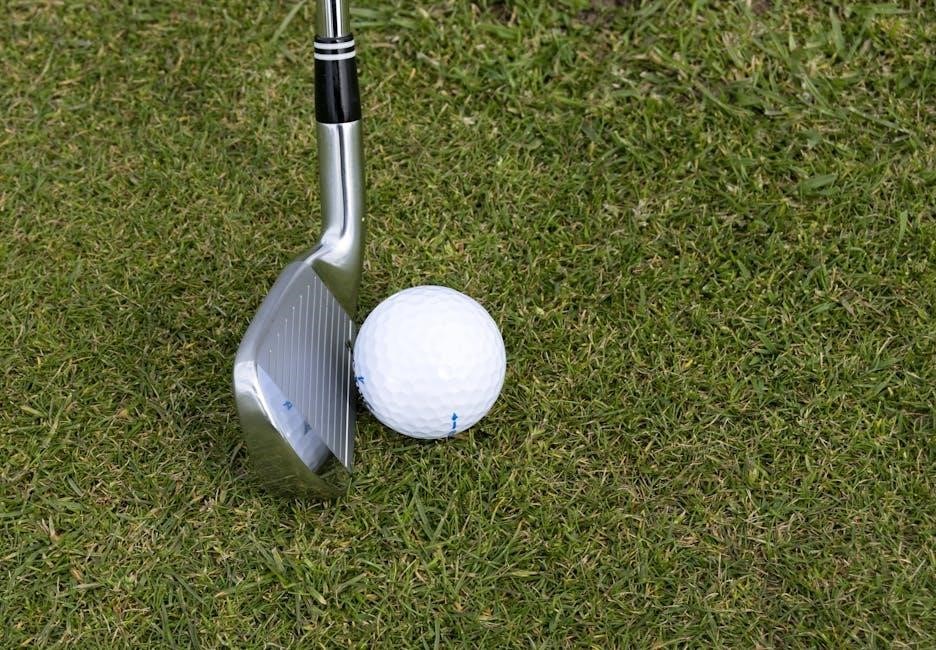
Shaft Material and Flex
Golf shafts are primarily constructed from graphite or steel, each exhibiting distinct flex characteristics. Graphite shafts are lighter, offering increased swing speed and are generally more flexible, promoting higher launch angles. They are popular among players seeking distance and forgiveness.
Steel shafts, conversely, are heavier and provide greater control and consistency. They tend to be stiffer, resulting in a lower trajectory and increased workability. The choice between materials depends on swing speed, skill level, and desired ball flight.
Graphite Shafts and Flex Characteristics
Graphite shafts are renowned for their lightweight nature, facilitating faster swing speeds, particularly beneficial for players with moderate to slow swings. They generally exhibit more flex than steel, leading to a higher launch and increased carry distance. Graphite offers excellent vibration dampening, enhancing comfort during impact.
Flex options in graphite range from extra stiff (X) to ladies (L), catering to diverse swing speeds and player preferences. Softer flexes suit slower swings, while stiffer flexes match faster tempos, optimizing energy transfer and control.
Steel Shafts and Flex Characteristics
Steel shafts are traditionally favored for their durability, consistency, and feedback, providing a more tactile sense of the swing. They are generally heavier than graphite, promoting a more controlled tempo and potentially enhanced accuracy. Steel offers less vibration dampening compared to graphite, which some players prefer for feel.
Flex options in steel, mirroring graphite, span from extra stiff (X) to ladies (L). Stiffer steel shafts are preferred by players with faster swing speeds seeking precision, while more flexible options suit slower swings, aiding in launch and distance.
Measuring Your Swing Speed
Accurately determining your swing speed is paramount for selecting the correct shaft flex. Launch monitors provide precise data, measuring clubhead speed which directly correlates to swing speed. These devices offer detailed analysis, including carry distance and ball speed, aiding in a comprehensive fitting process.
If technology isn’t accessible, swing speed can be estimated. A general assessment involves observing your typical shot distance with a driver. However, this method is less precise than using a launch monitor. Knowing your swing speed empowers informed decisions about shaft flex, optimizing performance.
Using Launch Monitors for Accurate Data
Launch monitors represent the gold standard for measuring swing speed and related metrics. These sophisticated devices utilize technologies like radar or cameras to meticulously track clubhead speed, ball speed, launch angle, and spin rate. This detailed data provides a precise understanding of your swing characteristics, far exceeding estimations.
By analyzing these parameters, a professional fitter can pinpoint the optimal shaft flex tailored to your individual swing. Launch monitors eliminate guesswork, ensuring a more accurate and effective club fitting experience, ultimately leading to improved performance and consistency on the course.
Estimating Swing Speed Without Technology
While launch monitors offer precision, estimating swing speed is possible without them. A general assessment involves observing your typical shot distance with a driver. Longer distances usually correlate with faster swing speeds, suggesting a stiffer shaft flex might be appropriate. However, this method is inherently less accurate.
Consider your ability to consistently make solid contact. Strong players with controlled swings often benefit from stiffer shafts, while those with slower, more sweeping motions may prefer more flexible options. Remember, this is a rough estimate; a professional fitting is always recommended for optimal results.
The Importance of Consistent Flex Throughout Your Set
Maintaining consistent shaft flex across your entire set of clubs is generally recommended for a more unified swing feel. Varying flexes can disrupt timing and require different swing mechanics for each club, hindering consistency. A consistent flex promotes a smoother transition and allows you to focus on ball striking rather than adapting to different shaft characteristics.
However, some players, particularly those with significant swing speed differences between their long and short irons, may benefit from slight flex variations. Ultimately, personal preference and professional fitting guidance are key to determining the optimal setup.
Can Shaft Flex Be Adjusted?
Generally, shaft flex cannot be significantly adjusted after manufacturing. Unlike grip size or lie angle, altering a shaft’s flex requires fundamentally changing the material’s properties, which isn’t practically achievable. While some limited adjustments might be possible through techniques like tipping (removing material from the shaft tip), these are complex and best left to experienced club fitters.
The most effective way to achieve the desired flex is to select the correct shaft during the initial club fitting process. Attempting to modify a shaft’s flex often compromises its integrity and performance.

Common Misconceptions About Shaft Flex
A prevalent misconception is that stiffer shafts automatically equate to better performance; however, the ideal flex depends on swing speed and tempo, not simply perceived skill. Many believe a “whippy” shaft adds distance, but it often sacrifices control and consistency. Another myth suggests that heavier shafts are always stiffer, ignoring material composition – graphite versus steel – which significantly impacts flex characteristics.
Finally, players often assume one flex fits all clubs, neglecting that driver, iron, and wedge flexes should be tailored to their specific roles and swing dynamics.

Shaft Flex and Different Club Types
Driver shaft flex generally favors slightly more flex to promote launch and maximize distance, often leaning towards regular or even slightly lighter flexes for moderate swing speeds. Iron shaft flex typically requires more control, with stiffer flexes preferred by skilled players for precision. Wedge shaft flex demands even greater accuracy, often utilizing stiffer shafts to minimize dispersion and facilitate shot-making.
Consistency across club types isn’t always necessary; tailoring flex to each club’s purpose optimizes performance, acknowledging differing swing mechanics.
Driver Shaft Flex Considerations
Driver shaft flex significantly impacts launch angle and ball speed. A shaft that’s too stiff can result in low launch and excessive backspin, reducing distance. Conversely, an overly flexible shaft may cause instability and inconsistent contact. Generally, slower swing speeds benefit from more flexible shafts (Regular or even Senior/Amateur), while faster swings require stiffer options (Stiff or Extra Stiff).

Proper flex maximizes energy transfer, optimizing distance and forgiveness. Considering tempo is also crucial; a smooth tempo might suit a slightly more flexible shaft.
Iron Shaft Flex Considerations
Iron shaft flex differs from driver flex, prioritizing control and accuracy. Players with faster swing speeds typically require stiffer iron shafts (Stiff or Extra Stiff) to manage the shorter length and maintain consistent ball striking. Slower swing speeds benefit from Regular or even Senior/Amateur flexes, promoting a smoother swing and better feel.
Consistency throughout the set is vital, but slight variations can be beneficial for specific players. A progressive set, with gradually stiffer shafts in longer irons, can optimize launch and control.
Wedge Shaft Flex Considerations
Wedge shaft flex demands precision and feel for short-game mastery. Generally, wedges require a slightly softer flex than irons, enabling greater control around the greens. Players with faster swing speeds might still opt for a Stiff flex, but a Regular flex is common for maximizing feel and responsiveness.
The shorter length of wedges necessitates a shaft that promotes a controlled, accurate swing. Maintaining consistency with iron flex is possible, but prioritizing feel often leads to a slightly softer wedge shaft.
How to Get Professionally Fitted for Shaft Flex
Professional fitting is paramount for optimal shaft flex selection. A qualified fitter utilizes launch monitors to analyze swing speed, clubhead speed, and ball flight characteristics. This data reveals the ideal flex for maximizing distance and accuracy.
The process involves testing various shafts with different flexes, observing launch angle, spin rate, and dispersion. A fitter considers player skill level and swing tempo, ensuring the chosen shaft complements individual mechanics. Don’t rely on generic charts; personalized fitting delivers superior results.

The Role of Shaft Weight in Conjunction with Flex
Shaft weight significantly interacts with flex, influencing swing feel and clubhead control. Lighter shafts generally promote faster swing speeds, while heavier shafts offer increased stability and precision. A lighter shaft paired with a flexible flex can create a whippy feel, potentially increasing distance for slower swings.
Conversely, a heavier shaft with a stiffer flex suits faster swingers, providing control and minimizing unwanted shaft bending. Finding the right balance between weight and flex is crucial for optimizing launch conditions and achieving consistent ball striking. Professional fitting considers both factors.
Understanding Torque and its Relationship to Flex
Torque, a shaft’s resistance to twisting during the swing, is closely linked to flex. Higher flex shafts generally exhibit lower torque, providing greater stability and control, especially for faster swing speeds. Lower flex shafts tend to have higher torque, offering more feel and potential for increased clubhead speed for slower swings.
However, excessive torque can lead to inconsistent shots and off-center impacts. A proper balance between flex and torque is essential for optimizing launch conditions and minimizing dispersion. Players should consider their swing characteristics when evaluating these factors.
Dynamic Loft and its Connection to Shaft Flex
Dynamic loft, the effective loft of a club at impact, is significantly influenced by shaft flex. A shaft that’s too stiff can reduce dynamic loft, resulting in a lower launch and increased roll. Conversely, an overly flexible shaft can increase dynamic loft, leading to a higher launch and potentially more backspin.
The ideal flex allows the club to return to square at impact, delivering optimal dynamic loft for the player’s swing. Matching flex to swing speed ensures efficient energy transfer and consistent launch conditions, maximizing distance and accuracy.
Shaft Flex and Tempo
Golf swing tempo, the speed at which the club is swung, plays a vital role in shaft flex selection. Faster tempos generally require stiffer shafts to control clubhead speed and prevent over-bending. Slower, smoother tempos often benefit from more flexible shafts, allowing for sufficient clubhead release and feel.
A mismatch between tempo and flex can lead to inconsistencies. A slow tempo with a stiff shaft may feel boardy, while a fast tempo with a flexible shaft can feel unstable. Finding the right flex complements a player’s natural rhythm for optimal control and power.
The Impact of Flex on Dispersion
Golf shaft flex significantly influences shot dispersion, impacting accuracy and consistency. An incorrect flex can cause the clubface to open or close prematurely, leading to pulls, pushes, slices, or hooks. Stiffer shafts generally promote a more stable clubface at impact, reducing dispersion for players with faster swings.
Conversely, more flexible shafts can help players with slower swings square the clubface, improving accuracy. Proper flex minimizes off-center hits and promotes a tighter shot pattern, ultimately leading to lower scores and more predictable ball flights.
Resources for Further Research on Golf Shaft Flex
For deeper understanding, explore websites like GolfWRX and MyGolfSpy, offering detailed articles and forum discussions on shaft flex. Club Champion’s fitting guides provide valuable insights into matching flex to swing characteristics. YouTube channels, such as Rick Shiels Golf and Mark Blackburn, feature instructional videos demonstrating flex’s impact.
Additionally, professional club fitters offer personalized assessments and recommendations. Manufacturers’ websites, like True Temper and Fujikura, provide technical specifications and comparison tools. These resources empower golfers to make informed decisions about their equipment.
Leave a Reply
You must be logged in to post a comment.