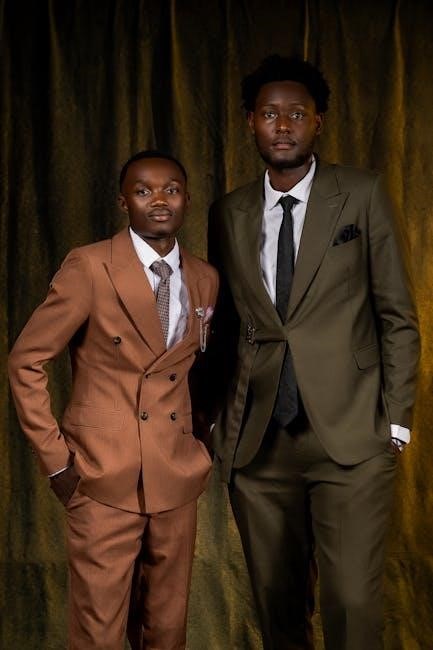
Understanding Suit Jacket Length: A Comprehensive Guide
Navigating the world of menswear, achieving a proper fit is paramount, and suit jacket length is a crucial element.
This guide details how length impacts silhouette, offering insights into standard sizes – Short, Regular, and Long – and modern trends.
Understanding jacket length ensures both comfort and a polished appearance, reflecting personal style and body proportions.
Proper length enhances overall aesthetics, making a significant difference in how a suit presents itself.
Achieving a well-fitted suit jacket transcends mere aesthetics; it’s about projecting confidence and sophistication. The foundation of this fit lies in understanding jacket length, a frequently overlooked yet critical component. A properly proportioned jacket harmonizes with your body, creating a balanced and flattering silhouette.
Suit jacket length isn’t a one-size-fits-all proposition. It’s intrinsically linked to your height, build, and personal preference. Variations like Short (S), Regular (R), and Long (L) cater to diverse physiques. Ignoring this aspect can result in a jacket that appears awkwardly short or excessively long, detracting from the overall look.
Beyond length, consider shoulder width, chest circumference, and sleeve length. These elements work in concert to deliver a truly bespoke fit. A knowledgeable tailor can refine these aspects, ensuring a jacket that feels comfortable and looks impeccably tailored. This introduction sets the stage for a deeper dive into the nuances of suit jacket length and fit.
Why Jacket Length Matters
Jacket length profoundly impacts the overall proportions of your silhouette. A correctly sized jacket visually elongates the torso, creating a more streamlined and sophisticated appearance. Conversely, an ill-fitting length can disrupt this balance, making you appear shorter or disproportionate. It’s a subtle detail with a significant visual effect.
Functionally, the right length allows for comfortable movement without restriction. A jacket that’s too short may ride up when you raise your arms, while one that’s too long can feel cumbersome and awkward. Proper length ensures the jacket complements your posture and doesn’t hinder your natural range of motion.
Stylistically, jacket length influences the perceived formality of the suit. Shorter jackets often convey a more modern, fashion-forward aesthetic, while classic lengths maintain a timeless elegance. Understanding this nuance allows you to select a jacket that aligns with your personal style and the occasion.
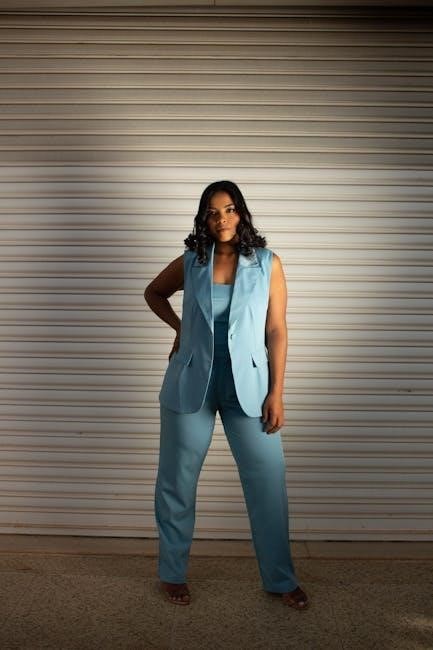
Standard Suit Jacket Lengths
Suit jackets typically come in three standard lengths: Short (S), Regular (R), and Long (L), each designed to complement different heights and builds for optimal fit.
Short (S) Jacket Length Explained
Short suit jacket lengths are designed for individuals of shorter stature, typically those under 5’8”. These jackets feature a reduced overall length, preventing the excess fabric that can overwhelm a smaller frame. The goal is to maintain proportion and avoid a boxy or ill-fitting appearance.
Specifically, a ‘Short’ jacket generally measures with a total length minus 2.5cm compared to the regular length. This subtle reduction ensures the jacket doesn’t appear too long, disrupting the visual balance. When selecting a ‘Short’ jacket, consider your chest measurement alongside the length to ensure a tailored fit.
A well-fitted short jacket will hit around the hip bone or slightly above, creating a more streamlined and modern silhouette. It’s crucial to avoid jackets that are too short, as this can create an unbalanced look.
Regular (R) Jacket Length Explained
Regular suit jacket lengths, denoted by ‘R’, are considered the standard and are designed to fit individuals of average height, generally between 5’8” and 6’0”. This length offers a balanced proportion for most body types, providing a classic and versatile silhouette. It’s the most commonly available size, making it easier to find a suitable fit.
The ‘Regular’ length serves as the baseline for other sizes; ‘Short’ and ‘Long’ are variations based on this standard. When measuring, the jacket should fall approximately at the midpoint between the shoulder and the wrist. This ensures a comfortable range of motion and a visually appealing aesthetic.
A properly fitted ‘Regular’ jacket will cover the seat and maintain a clean line, avoiding both excessive length and a cropped appearance. It’s a safe and reliable choice for those unsure of their ideal jacket length.
Long (L) Jacket Length Explained
Long (L) suit jacket lengths are designed for taller individuals, typically those exceeding 6’0” in height. Adding 2.5cm to the total length, with a 1.5cm increase in sleeve length, ensures proper proportion and avoids a jacket that appears too short in the arms and body. This length provides adequate coverage and maintains a balanced silhouette for a taller frame.
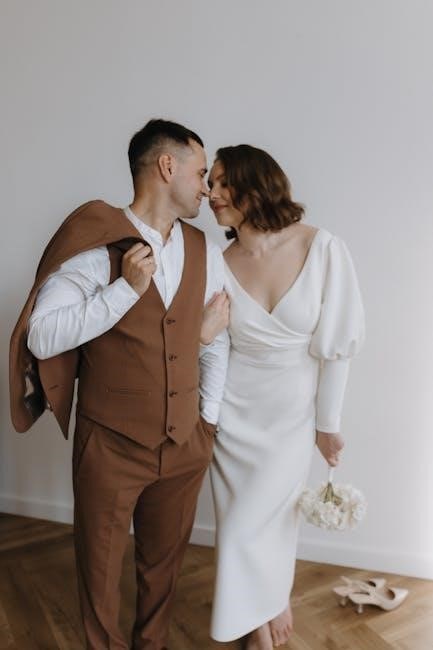
Choosing a ‘Long’ jacket prevents the issue of the jacket riding up when moving or sitting, which can happen with standard or short lengths on taller men. It’s crucial for maintaining a polished and sophisticated look.
The ‘L’ designation ensures the jacket’s hem falls comfortably below the seat, creating a streamlined and flattering appearance. It’s essential to consider overall body proportions when selecting a ‘Long’ jacket to avoid an overly elongated look.

How to Measure Suit Jacket Length
Accurate measurements are key to a perfect fit! Measure from the collar to the hem, and understand ‘drop’ – the difference between chest and length – for optimal tailoring.
Measuring from the Collar to the Hem
To determine suit jacket length, start at the highest point of the collar – where it meets the back of the neck. Extend the measuring tape straight down the back of the jacket, following the natural curve, to the very bottom hem. Ensure the tape remains taut but doesn’t pull the fabric.
This measurement represents the overall length of the jacket. It’s crucial for comparing against size charts and determining whether a Short (S), Regular (R), or Long (L) size is most appropriate. Remember to have someone assist you for accuracy, as self-measuring can be tricky. A precise collar-to-hem measurement is the foundation for a well-fitted suit jacket, influencing both style and comfort.
Consider that different brands may have slight variations in their sizing, so always consult the specific brand’s size guide alongside your measurement.
Understanding Drop (Difference Between Chest and Length)
“Drop” in suiting refers to the difference between your chest measurement (in inches) and your jacket length (also in inches). This number is typically represented as a two-digit number, like 6 or 8, indicating the drop. For example, a 40R jacket for someone with a 40-inch chest has a drop of 0.
A larger drop generally suits taller, slimmer builds, while a smaller drop is better for shorter, broader builds. Understanding your drop helps refine your jacket size beyond just chest and length. It ensures a balanced proportion, preventing a jacket from appearing too boxy or too tight.
Calculating your ideal drop involves knowing both your chest and desired jacket length, then finding a jacket that matches that difference.
Measuring Sleeve Length in Relation to Jacket Length
Sleeve length is intrinsically linked to jacket length for a harmonious fit. Ideally, approximately ½ to ¾ of your shirt cuff should be visible below the jacket sleeve. A properly fitted sleeve allows for comfortable arm movement without bunching or appearing too short.
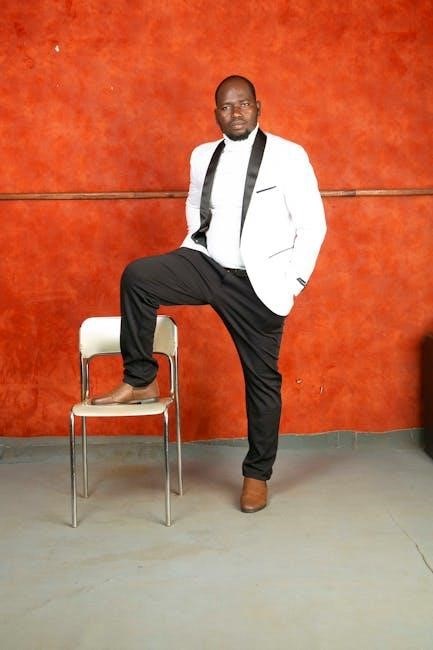
Jacket length influences where the sleeve falls on your arm. Longer jackets often require slightly longer sleeves to maintain the correct cuff exposure. Conversely, shorter jackets may necessitate shorter sleeves. Standard sleeve lengths are often tied to jacket size (e.g., 32″, 33″, 34″).
When measuring, bend your arm slightly; the sleeve should end around your wrist bone. Adjustments may be needed by a tailor to achieve a perfect sleeve length, ensuring a polished and proportional look.
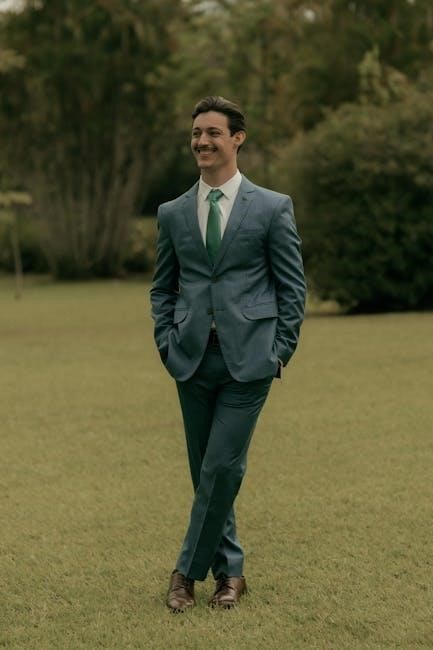
Suit Jacket Length Based on Height
Height significantly impacts the ideal jacket length; shorter individuals benefit from shorter jackets, while taller frames suit longer lengths.
Proportion is key to a flattering silhouette and balanced appearance.
Jacket Length for Shorter Individuals
For individuals of shorter stature, prioritizing jacket length is crucial to avoid appearing disproportionate. A shorter jacket – often designated as ‘S’ for short – is generally recommended. This style prevents the jacket from overwhelming the frame and maintains a balanced silhouette.
Specifically, the jacket should ideally end around the widest part of the hips, or slightly above. Avoid longer jackets that can visually shorten the legs and create an unbalanced look. A well-fitted, shorter jacket elongates the torso and provides a more streamlined appearance.
Consider a more tailored fit overall, as excessive fabric can further detract from height. Sleeve length is also important; ensure sleeves end at the wrist bone to maintain proportion. Remember, the goal is to create a harmonious and flattering fit that complements your build.
Jacket Length for Average Height Individuals
Individuals with average height generally have the most flexibility when choosing a suit jacket length. The ‘R’ or regular length is typically the most suitable option, offering a classic and balanced proportion. This length usually falls around the hip bone or slightly below, creating a harmonious silhouette.
However, personal preference and body type still play a role. Those with a longer torso might prefer a slightly longer jacket, while those with a shorter torso may find a shorter length more flattering. It’s essential to try on different lengths to determine what best complements your physique.
Pay attention to the break – the point where the jacket closes. A slight break is generally preferred, allowing for comfortable movement without appearing overly fitted or boxy. Proper sleeve length, ending at the wrist bone, is also crucial for a polished look.
Jacket Length for Taller Individuals
For those blessed with height, a ‘L’ or long jacket length is often the most proportionate choice. Standard or regular lengths can appear disproportionately short, disrupting the overall silhouette and making the jacket look awkwardly cropped. Long jackets provide the necessary coverage and balance, ensuring a sophisticated appearance.
The goal is to maintain a similar proportion to average-height individuals – the jacket should fall around the hip bone or slightly below. However, taller individuals can often pull off a slightly longer length without appearing overwhelmed. Consider the break; a moderate break is still ideal for comfort and movement.
Sleeve length is particularly important; ensure the sleeves extend to the wrist bone, showcasing an appropriate amount of shirt cuff. A well-fitted long jacket will elongate the body and enhance a confident, commanding presence.
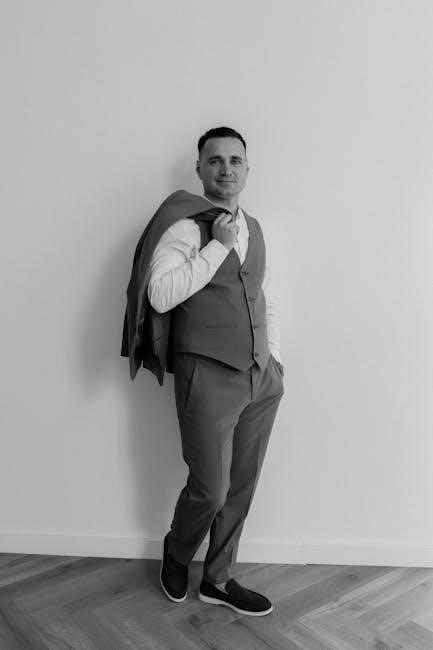
Jacket Length and Body Type
Selecting the correct jacket length requires considering your build; slim, athletic, or larger frames benefit from tailored lengths for optimal balance and a flattering fit.
Jacket Length for Slim Builds
For individuals with a slim build, the goal is to avoid a jacket that overwhelms the frame or appears boxy. A shorter jacket length, often designated as ‘S’ for short, is generally the most flattering choice. This length helps to maintain proportion and prevents the jacket from looking too loose or ill-fitting.
Specifically, a shorter length visually broadens the shoulders and creates a more balanced silhouette. It’s crucial to ensure the jacket isn’t excessively tight, allowing for comfortable movement and a clean line. Pay attention to the shoulder fit – a well-fitted shoulder is paramount. A regular length might work if the shoulders fit perfectly, but avoid a long jacket, as it can elongate the torso disproportionately, making the wearer appear even slimmer.
Consider a slightly more tailored cut to accentuate the physique without appearing restrictive.
Jacket Length for Athletic Builds
Individuals with athletic builds, characterized by broader shoulders and a V-shaped torso, require a jacket length that complements their physique without constricting movement. A regular (R) jacket length often provides the best balance, allowing for comfortable shoulder movement and a flattering silhouette. However, careful consideration is key.
The broader shoulders necessitate a jacket with sufficient chest and back width to avoid pulling or tightness. A slightly longer length might be suitable if the individual is taller, ensuring the jacket covers the seat adequately. Avoid excessively short jackets, as they can make the shoulders appear disproportionately wide.
Focus on a tailored fit that follows the natural contours of the body, highlighting the athletic shape without appearing overly tight. Prioritize shoulder fit and ensure ample room for movement in the back and arms.
Jacket Length for Larger Builds
For individuals with larger builds, the goal is to achieve a proportionate and comfortable fit. A long (L) jacket length is frequently the most flattering option, providing adequate coverage and balancing the silhouette. This length helps to elongate the torso and prevent the jacket from appearing boxy or disproportionate.
It’s crucial to avoid jackets that are too short, as they can accentuate the midsection. Ensure the jacket comfortably buttons without straining, and that there’s sufficient room in the chest and back. Pay close attention to shoulder width; a proper fit here is paramount.
Consider a jacket with a slightly more structured silhouette to provide definition. A tailored fit, rather than a tight one, will offer both comfort and a polished appearance. Prioritize quality fabrics that drape well and avoid adding bulk.
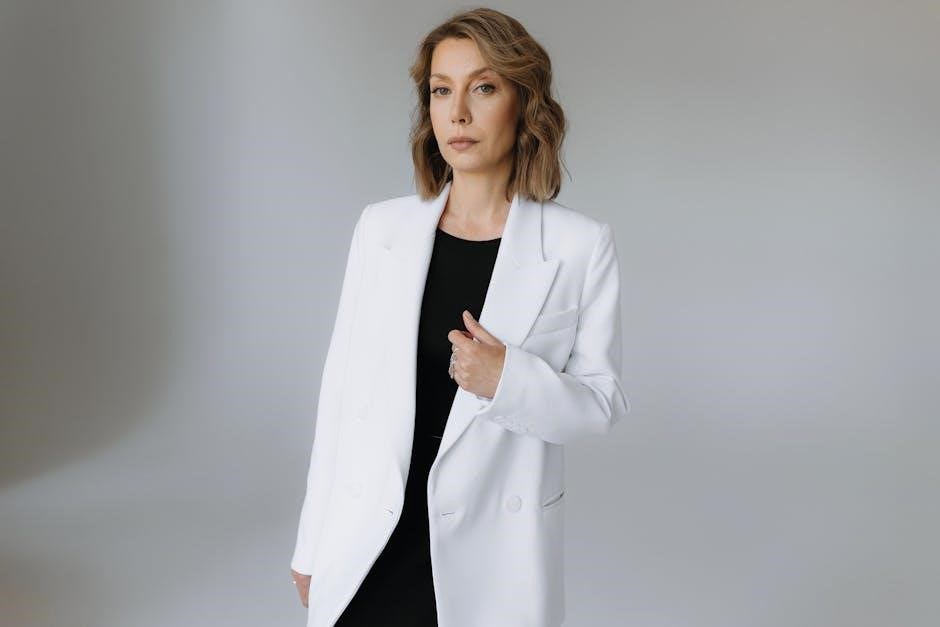
Determining Your Correct Jacket Size
Accurate measurements of chest, shoulders, and overarm are vital for a well-fitted suit jacket. These key dimensions dictate the appropriate size and ensure optimal comfort.
Chest Measurement and Jacket Size
Determining your chest measurement is the foundational step in finding the correct suit jacket size. Use a flexible measuring tape, keeping it level and comfortably snug – not tight – around the fullest part of your chest.
Ensure you’re wearing a thin shirt during measurement for accuracy.
Generally, the jacket size corresponds closely to your chest measurement in inches, particularly within the US system. However, be aware that sizing can vary significantly between brands and even regional manufacturers.
A jacket labeled 34R, for example, is designed to fit a chest circumference of 32-34 inches, but always consult the specific brand’s size chart.
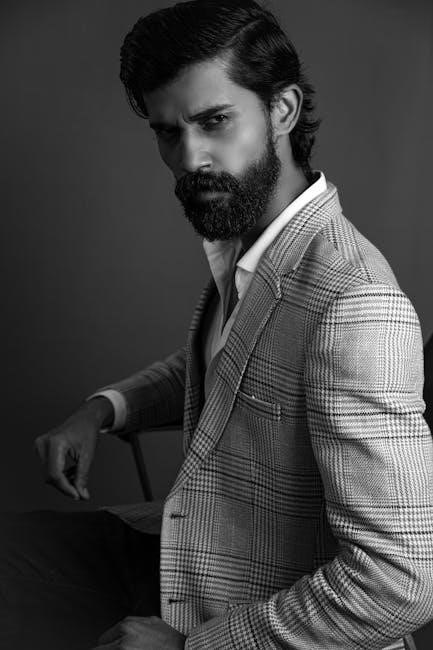
Don’t assume a direct correlation; always double-check. Measuring across the chest and doubling the result provides your chest circumference, a crucial number when selecting the right jacket size.
Prioritize comfort and a clean silhouette over strictly adhering to a number.
Shoulder Width and Jacket Size
Beyond chest size, shoulder width – often termed “point-to-point” measurement – is arguably the most critical factor in suit jacket fit. This measurement dictates how the jacket sits across your shoulders, impacting both comfort and appearance.
To measure, lay a jacket flat and measure horizontally from the outside edge of one shoulder seam to the outside edge of the other. A well-fitting jacket’s shoulder seams should lie flat and extend slightly beyond your natural shoulder line – about half an inch is ideal.
If the shoulder seams are too narrow, the jacket will feel restrictive and pull across the back. Too wide, and it will appear sloppy and ill-defined. Prioritize this measurement; alterations to the shoulder are complex and costly.
Focus on finding a jacket where the shoulder width closely matches your own for a clean, structured look.
Overarm Measurement and Jacket Size
The overarm measurement, encompassing chest and shoulder, is vital for determining a suit jacket’s overall fit and how it drapes across your torso. It’s often used in sizing charts, providing a more comprehensive picture than chest measurement alone.
To obtain this measurement, measure around your body, starting from the highest point of your shoulder, down the outside of your arm, across your chest, and back up to the starting point. This measurement helps determine the jacket’s breadth and ensures comfortable arm movement.
Comparing your overarm measurement to a size chart is crucial, especially when purchasing online. A correctly sized jacket will allow for a full range of motion without feeling tight or restrictive. Remember that variations exist between brands, so always consult the specific chart provided by the retailer.

Modern Trends in Suit Jacket Length
Contemporary fashion leans towards shorter jacket lengths, offering a streamlined silhouette, while classic lengths remain timeless.
Choosing depends on personal preference and desired aesthetic.
Shorter Jackets: A Contemporary Look
Shorter suit jackets have gained significant popularity in recent years, representing a modern departure from traditional tailoring. This trend emphasizes a more youthful and fashion-forward aesthetic, often favored by those seeking a slimmer, more athletic silhouette. The reduced length typically exposes more of the trouser waistband, creating a visually elongated leg line.
This style often works well for individuals with longer torsos, as it helps to balance proportions. However, it’s crucial to ensure the jacket doesn’t appear too short, which can disrupt the overall harmony of the outfit. A well-fitted shorter jacket should still cover the seat and maintain a refined appearance. It pairs exceptionally well with tapered trousers and contemporary footwear, completing a stylish and confident look.
Classic Lengths: Timeless Style
Classic suit jacket lengths, typically categorized as ‘Regular’ or ‘Long’, remain a cornerstone of sophisticated menswear. These lengths prioritize a balanced and proportionate silhouette, offering a timeless appeal that transcends fleeting trends. The ‘Regular’ length is the most versatile, suiting a wide range of body types and heights, while the ‘Long’ length provides additional coverage and formality.
A jacket of classic length traditionally falls around the mid-fly of the trousers, offering a refined and balanced appearance. This style is particularly well-suited for more formal occasions and professional settings, conveying an air of authority and elegance. Choosing a classic length ensures a polished and enduring look, making it a reliable investment for any discerning gentleman’s wardrobe.
Leave a Reply
You must be logged in to post a comment.